Seasonal Tea Corner Decor: Styling Teapots and Tea Sets for Spring, Summer, Fall, and Winter
A tea corner does not need a whole room. A side table by a window, a shelf above the kettle, a tray on a console — that is enough space. What keeps it from going stale is rotation. Four times a year, change the soft things: linens, flowers, the small wares you leave on display, the candle, the tray. Keep the bones in place and the corner reads spring in April and winter in January without a single trip to a furniture store.
Build the Fixed Layer First
Before you style anything, decide what never moves. A stable base is what separates a considered corner from a shelf of unrelated objects. Most tea corners need four things:
- A surface: a small wooden table, a marble-topped console, a deep windowsill, or a sturdy shelf.
- A tray with a lip, so drips stay contained and the whole arrangement can be lifted and wiped in one motion.
- One anchor teapot — the one you reach for most, kept out rather than hidden in a cupboard.
- A single vessel for plant material: a small vase, a bud glass, a low bowl, a jam jar you do not mind showing.
Everything else is the seasonal layer, and it should fit in one box between rotations. If it does not fit in the box, it is clutter, not decor.
Spring: Pale Glaze, Young Green, One Cut Stem
Spring styling works best when it looks slightly unfinished. Think celadon, cream, soft gray, and the yellow-green of new leaves. Thin porcelain suits the season — a small gaiwan, a white cup, a glass teapot that lets you watch first-flush green tea open leaf by leaf. Jasmine works here too.
For linens, choose oat, sage, undyed cotton, or washed linen. Nothing stiff. On the tray, add three tulips in a narrow vase, a single narcissus, or a branch of forsythia forced indoors in water. A pale wood or bamboo tray keeps the tone light. Skip dried grasses and dark glazes; they pull the corner straight into October.
A quick spring check
If the whole arrangement looks like it was assembled in one color family too neatly, add one warm note — a copper spoon, an amber honey jar, a wooden lid. One odd object makes the rest look chosen rather than matched.
Summer: Glass, Stone, and Things That Like Water
Heat changes what feels pleasant to look at and to hold. Put away the heavy teapot and bring out glass or pale stoneware. Iced tea in a glass pitcher, mint growing in a glass of water, a small dish of sliced citrus set beside the cups — these read cooler than any printed pattern.
Swap the solid tray for a slatted bamboo or rattan mat that can get wet without damage. Linens should be white, blue-and-white, or simple stripes, and you will want to wash them more often in humid weather. For flowers, hydrangea in a low bowl or a few stems of mint will hold up better than anything fussy. Keep scented lilies away from the tea itself; strong perfume flattens the taste of lighter leaves.
Lower the profile of the corner in summer. Fewer tall objects, more shallow bowls and flat trays. If you have a windowsill, rotate the plants so nothing scorches on the glass.
Fall: Warm Glaze, Dark Wood, Dried Stems
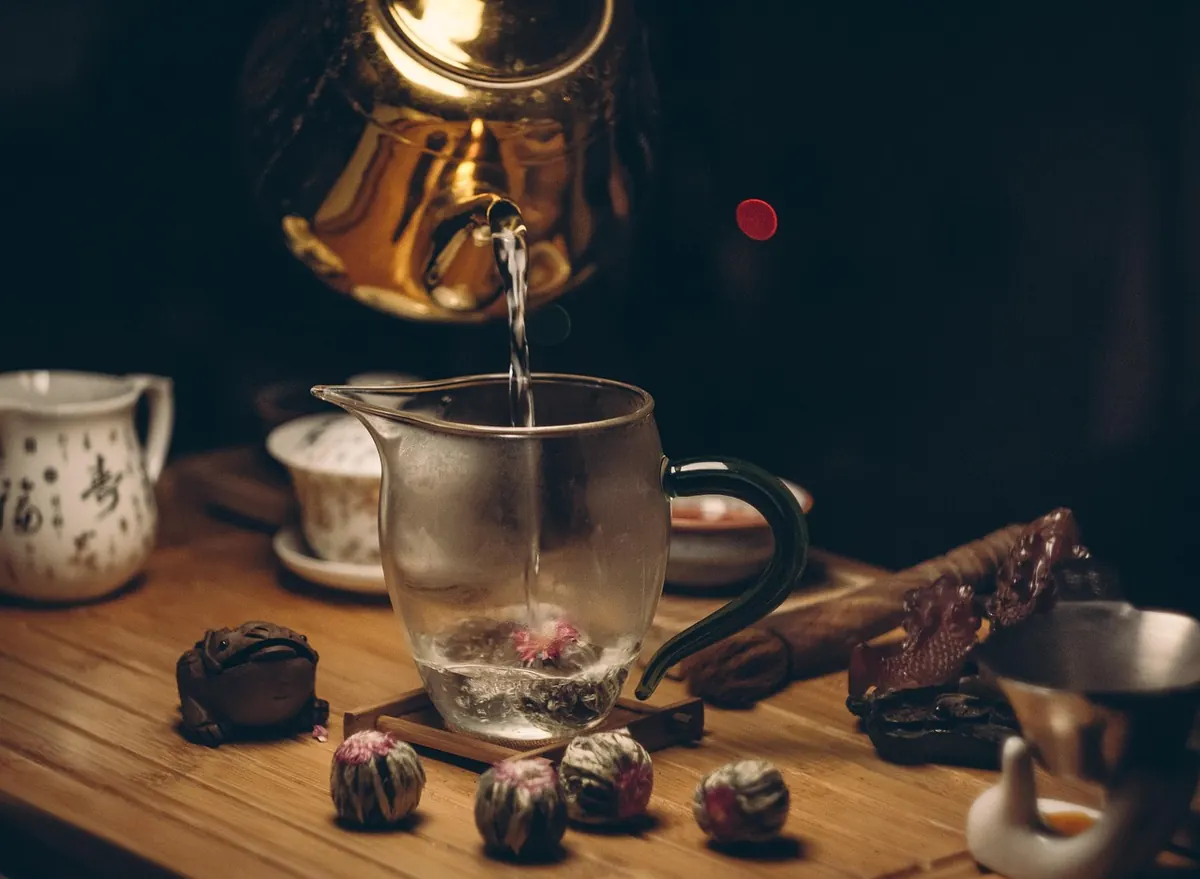
Autumn is the season for texture rather than more color. Rust, amber, oxblood, and deep green glazes come into their own, along with stoneware, unglazed clay, and cast iron. The tea tends darker and rounder too: roasted oolong, hojicha, a strong black tea with milk.
A walnut, dark lacquer, or patinated copper tray anchors the arrangement. Lay down heavier cotton, flannel, or a wool runner instead of summer linen. For plant material, chrysanthemums, seed heads, dried grasses, and bare branches last for weeks and look better as they fade. One small candle or a low lamp handles the earlier dusk. Keep open flames clear of fabric and never leave one burning unattended.
If your corner has a shelf, this is the season to move the taller teapot to the front and let the smaller cups sit behind it. Overlap things slightly. Autumn tolerates a little crowding.
Winter: Depth, Warmth, and One Strong Shape
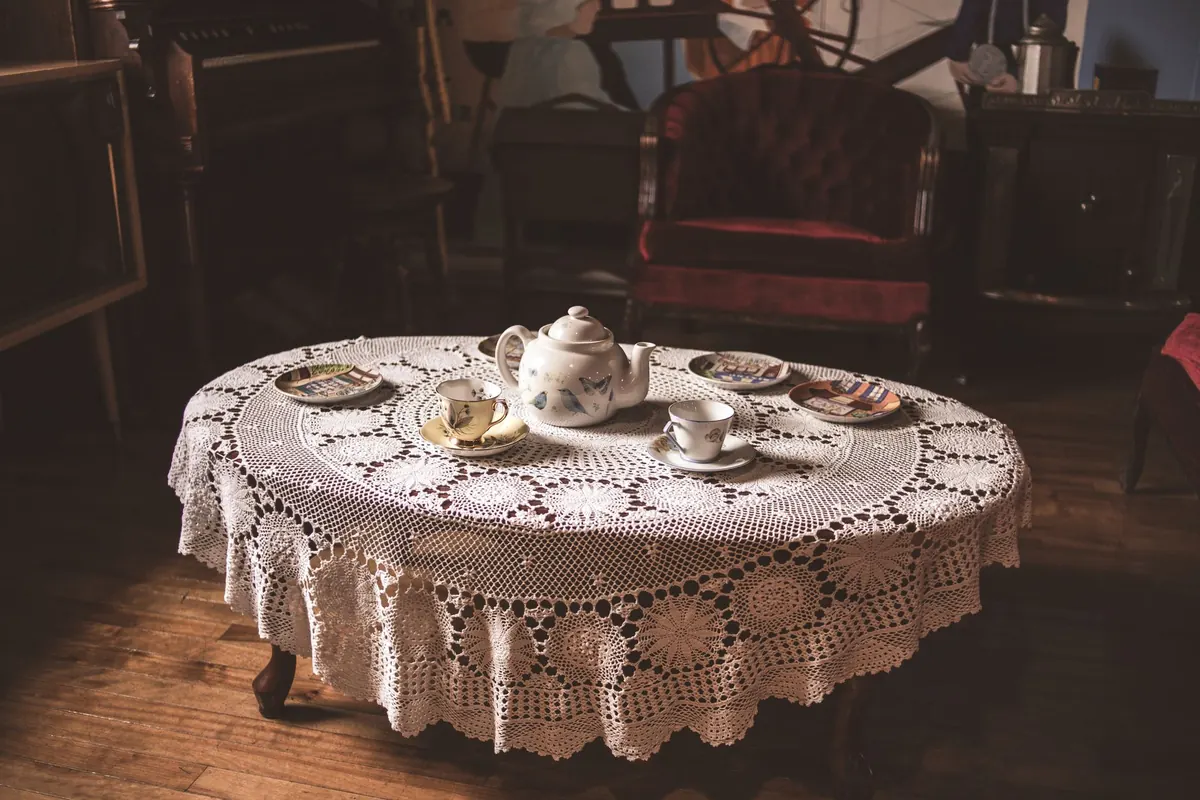
Winter wants weight. A big teapot, a cast iron kettle, a tea cosy, a thick cup you can hold with both hands. Wool, velvet, and sheepskin belong here, along with white, silver, deep blue, and evergreen. Amaryllis and paperwhites are the classic winter flowers, though both carry a strong scent — keep them a step away from the cups. Evergreen sprigs and a few red berries cost almost nothing and last for weeks.
Add light. A small table lamp with a warm bulb does more for a winter tea corner than any new purchase. Layer a second textile: a folded blanket on the chair, a wool mat under the tray. One caution with cast iron and unglazed clay: dry them thoroughly before storing, because neither forgives a damp cupboard.
The Rotation Kit: One Box, Four Times a Year
Keep a single lidded box for the out-of-season pieces. A working kit usually holds:
- Two runners or small tablecloths, one light and one dark.
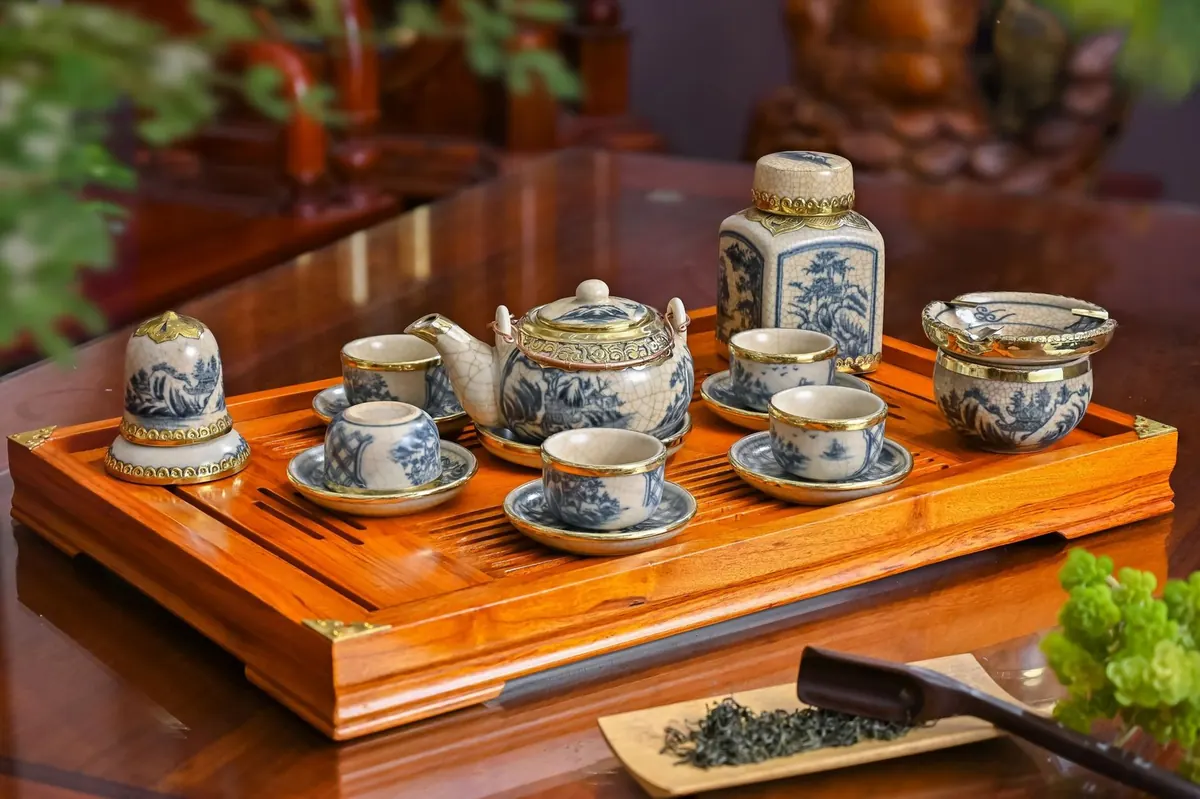
- A spare tray in a contrasting material — pale wood for summer, dark lacquer for winter.
- Two small vases: one narrow, one low and wide.
- A candle in a glass, plus matches.
- A short string of dried stems or a seasonal branch, replaced each year.
- One or two cups that only appear in that season.
Label the box by season if you have several. Ten seconds of searching beats a rummage through the cupboard every March.
A Twenty-Minute Swap
- Clear the surface completely and wipe it down, including under the tray.
- Wash and dry the teapot you are putting away, then return it to the box.
- Set the new tray and run the new linen across it.
- Bring out the seasonal teapot and cups; keep the anchor piece in place if it still suits.
- Add plant material and one candle or light source.
- Brew something from that season and sit with it for five minutes. If the corner feels cramped or empty, adjust one thing — not five.
A Corner You Actually Use
The best seasonal styling stays out of the way of pouring tea. Leave clear space for the kettle, keep the cups within reach, and do not stack objects so tightly that reaching for a lid becomes a balancing act. Change the arrangement when it stops pleasing you, not when a calendar says so. A corner that gets used daily will tell you what belongs there far better than any plan.
Photo: CUN_CUN / Pixabay

You Might Also Like
Match a teapot to a tea lover's habits, space and taste with this practical guide to sizes, materials, styles and the small details that make a gift usable.
A practical guide to hosting afternoon tea at home: choosing the right teapot, arranging a working tea set, and timing the brew and the food.